CCMR helps analyze darkest fabric ever made
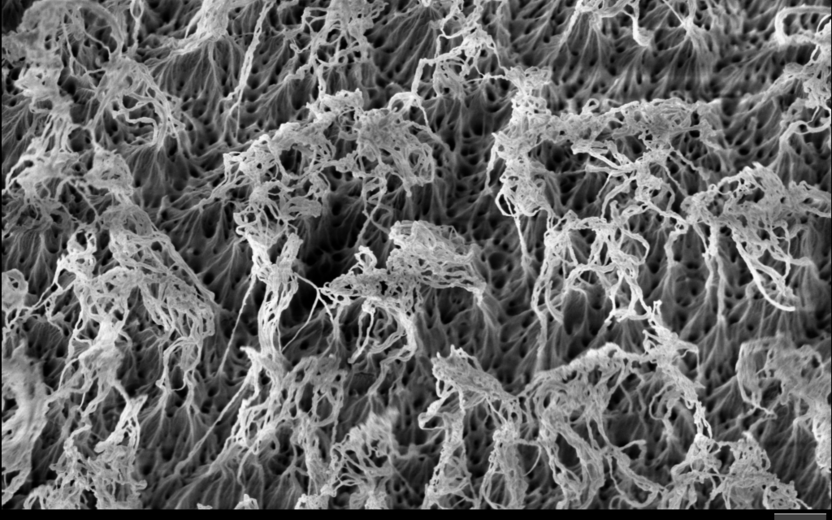
SEM mage of ultrablack merino wool. This SEM shows polydopamine (PDA) dyed merino wool that has been treated with air plasma for 80 min. With plasma treatment of PDA dyed merino wool, anisotropic etching occurs thereby creating nano/microstructures, which results in ultrablack.
The above is an SEM mage of ultrablack merino wool. This SEM shows polydopamine (PDA) dyed merino wool that has been treated with air plasma for 80 min. With plasma treatment of PDA dyed merino wool, anisotropic etching occurs thereby creating nano/microstructures, which results in ultrablack.
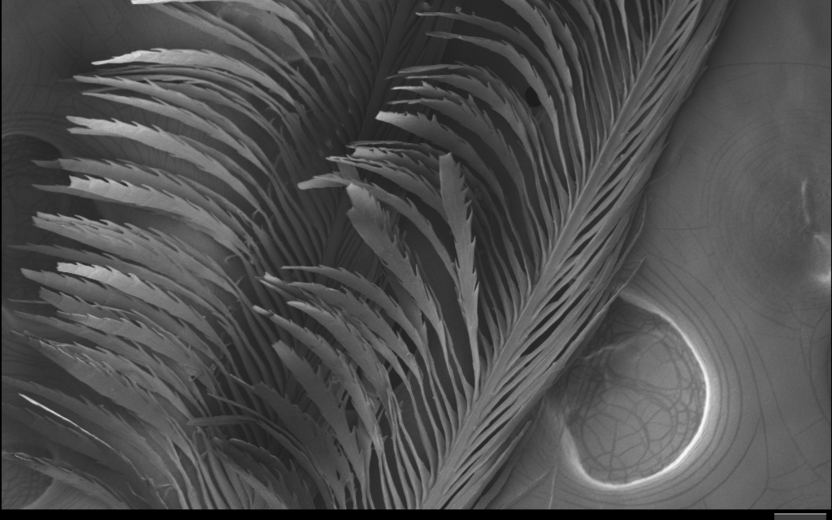
Cornell University researchers have developed the darkest fabric ever reported by replicating the microscopic structure found in the feathers of the magnificent riflebird. This new "ultrablack" wool fabric absorbs 99.87% of visible light and maintains its black appearance from various angles, distinguishing it from other synthetic ultrablack materials. (See paper in Nature Communications.)